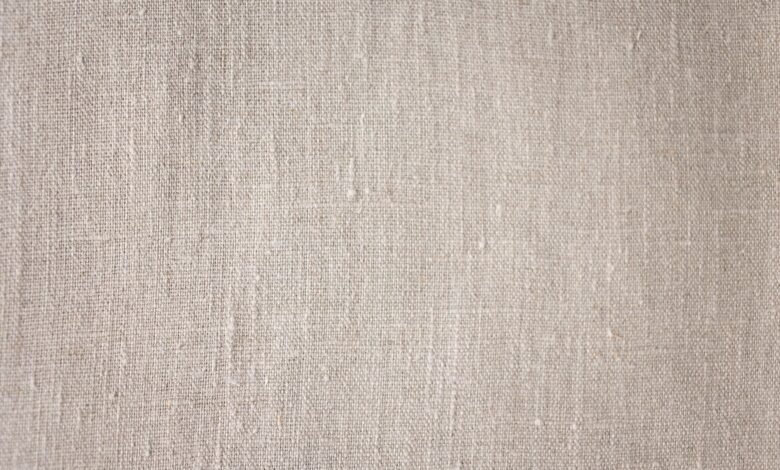
Linen performance comes down to two things you can estimate by hand: fabric weight and weave tightness, because weight predicts drape stability and heat retention while weave density predicts whether it will hold shape or stretch and sag. A tight plain weave holds a sharp shirt line and resists bagging, while a loose weave may feel substantial but loses shape faster because gaps let yarns shift.
The mistake is treating higher GSM as automatically better and softness as quality — heavily enzyme-washed coarse linen feels soft in store but reveals rough texture after a few washes when finish fades. You can check origin cues, wet-spun vs dry-spun hand, and light test for density in under 30 seconds, which predicts shrinkage, pilling, and hem growth more reliably than price. The checks below translate weight and weave into real wear outcomes.
Why GSM alone misleads for linen
GSM measures grams per square meter, so it captures mass, not construction. For linen shirting, 150-180 GSM is typical, for trousers and blazers 180-240 GSM, for heavy overshirts above 240 GSM. A 170 GSM fabric with dense, balanced weave can outperform a 220 GSM loose weave because dense interlacing locks yarns and prevents yarn slippage that causes bagging at knees and seat.
Heavier is not always cooler — linen breathes because of hollow fibers and low moisture regain, but a very heavy loose weave holds more still air and feels warmer than a lighter tight weave that allows airflow while maintaining opacity. For professional wear, aim for mid-weight with high density rather than max weight.
Weave structure — plain, twill, and density
Plain weave is one over one — stable, crisp, shows wrinkles sharply but holds shape. Twill (2/1 or 2/2) gives diagonal texture, slightly better drape and wrinkle masking, but can stretch more on bias if density is low. What matters more than weave type is cover factor — how much of the surface is yarn vs gap.
Wet-spun linen uses long line fibers combed and spun wet, giving smooth, lustrous yarn with fewer slubs and higher strength. Dry-spun uses shorter tow fibers, giving irregular slubby texture marketed as rustic but generally weaker and more prone to fuzzing and pilling after washing. You can feel it — wet-spun is cool, smooth, even; dry-spun is irregular, fuzzy, warmer initially.
Matrix showing why mid-weight tight weave outperforms low-weight loose or high-weight loose for professional linen.
The first-wash test and what linen reveals
Unwashed linen typically shrinks 3-5% as tension releases, with most loss in first wash and minimal after. Well-made pre-washed linen shrinks 1-2%. If brand does not state pre-shrunk, assume 3-5% and check hem allowance — deeper hems allow letting out if needed.
After first wash, wet-spun linen smooths and softens while maintaining strength; dry-spun may fuzz and develop surface pills as short fibers escape. Enzyme or stone washing used to soften coarse dry-spun linen in store washes out after 2-3 cycles, revealing coarser hand underneath — that is why the softest linen in store is not always best long term.
Fail: bright gaps, uneven slubs
Fail: fuzzy, irregular, warm = dry-spun short
No info = assume short-staple
Checklist translating light, hand, and label into linen durability prediction.
Choosing linen for professional longevity
- Shirts: 160-190 GSM, tight plain weave, wet-spun, European flax if possible. Expect 3% shrinkage if not pre-washed.
- Trousers: 190-230 GSM, tight plain or 2/1 twill, mid-weight holds crease and resists knee bagging. Deeper hems and waistband curtain help with shrinkage allowance.
- Blazers: 210-250 GSM, tight weave, fully lined or half-lined to support drape. Avoid loose heavy linen that sags at lapel.
Avoid “rustic slubby” marketed as artisanal if slubs are dense and yarn is fuzzy — intentional texture is sparse and even, poor quality is irregular and hairy. The former adds character; the latter pills and weakens at friction points.
Weight plus density plus spinning method predicts linen life
Linen that lasts in a professional wardrobe is not the heaviest or the softest in store — it is mid-weight with tight, uniform weave and wet-spun long fibers. Hold to light for density, run palm for smoothness, and read for European flax or wet-spun cues. That combination predicts whether a shirt holds its line after 20 washes, whether trousers bag or hold, and whether shrinkage stays within 1-2% or hits 5%. Choose tight over heavy, long fiber over soft finish, and you avoid the common trap where rustic marketing hides short-staple construction.
Frequently Asked Questions
Does higher GSM always mean better quality linen?
No. GSM measures weight, not construction. A 170 GSM dense weave often outperforms a loose 220 GSM fabric because weave density determines shape retention and bagging resistance more than mass alone.
How much will linen shrink after first wash?
Typically 3-5% if not pre-washed, with most happening in first wash. Pre-washed or garment-washed linen shrinks 1-2% further. Hot water and high heat increase loss.
What is difference between wet-spun and dry-spun linen?
Wet spinning uses water to align long fibers into smooth, strong yarn. Dry spinning processes shorter fibers into coarser, irregular yarn that feels rustic initially but pills and fuzzes faster. Wet-spun is generally more durable and holds shape better.
Can I test if linen is pure without damaging?
Non-damaging clues are origin labeling, hand-feel, and burn test on interior thread if you can snip hidden seam allowance — pure linen burns like paper with gray ash, synthetics melt and bead. Light and palm tests give most info without damage.